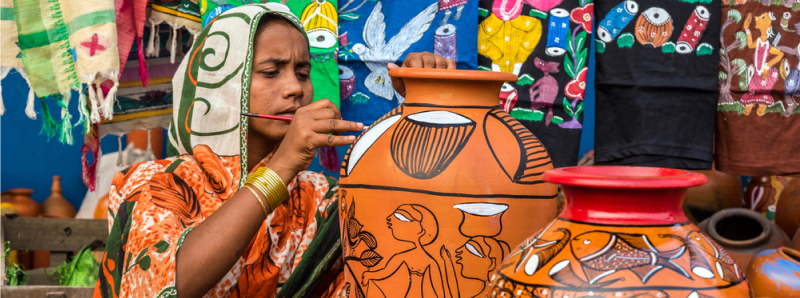
Clay Jewelry Making
Clay Ornament Making Training:
Clay ornament making (Terracotta Jewelry) is an ancient and beautiful art form that provides an excellent opportunity for self-employment along with creative expression. This art requires no formal education, and rural artisans, especially women, can easily learn this skill to become financially independent. Due to the rising demand for eco-friendly and handmade products, the clay jewelry business can prove to be very profitable.
Potential for Self-Employment and Rural Women's Empowerment:
Clay craft can be a powerful means of livelihood in rural areas. This business can be started with very low investment, as its primary raw material – clay – is easily and often freely available locally. Women can do this work in their spare time alongside their household chores. By receiving proper training, they can create attractive jewelry by giving a modern touch to traditional designs, which are in high demand in urban markets, craft fairs, and on online platforms.
Understanding Raw Materials (Clay) and Tools:
During the training, participants are taught how to select the right type of clay for jewelry making and how to purify and prepare it. The process of kneading the clay, making it pliable, and removing air bubbles is explained. Additionally, practical knowledge is provided on simple tools for shaping ornaments, using molds, and the process of baking them in a kiln.
Types of Ornaments Covered in Training:
This training program offers systematic training in making various types of clay ornaments, including the following:
- Necklaces and Pendant Sets
- Earrings and Jhumkas
- Bangles and Bracelets
- Anklets
- Rings and Brooches
- Maang Tikka and other traditional ornaments
Attractive Designs and Painting:
Trainees are taught various design techniques to make the clay ornaments attractive. This includes delicate carving on clay, creating different textures, and adding small decorative elements. After the jewelry is baked, training is also given on how to apply attractive and durable colors, as well as how to use varnish to make them waterproof.
Safety and Quality Control:
The training emphasizes the safe use of pottery tools and taking precautions while operating the kiln for baking the jewelry. Quality control measures are taught to ensure each piece is of high quality, such as preventing cracks, ensuring color longevity, and achieving a proper finish.
Business and Marketing Skills:
This training provides guidance to artisans on how to price their products correctly, package them beautifully, and establish their own brand. They are taught strategies for selling through local markets, tourist spots, handicraft stores, and online through social media. After completing the training, rural artisans can confidently start their own business and create a source of steady income.

